Why Coin Archives Are a Collector’s Treasure Chest: A Look Back
Let’s not use textbook language. Think about how it would feel to hold an old coin with rough edges and a faded emperor on it. It would be like a history lesson crushed into metal. How do you find out what happened? That’s when coin archives come into play.
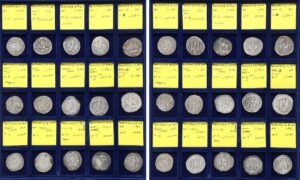
You might think of coin archives as a secret attic for collectors. Dusty, messy, but full of things like medieval coins and sparkling commemorative coins. Want to learn about a little-known Roman denarius? There is most likely a letter, a document, or a picture hidden away in an archive. Or maybe you want that strange 1922 misprint? Difficult, but not impossible.
People should rise up and applaud online coin archives. These digital vaults are like flea marketplaces that are open all the time. You can look through old catalogs, auction ads, and pricing guides, sometimes all before breakfast. The diversity is crazy. I found a silver groat next to a Space Shuttle memorial last month. Coins that are old, new, or just plain weird. It’s like going through the nooks of history.
People who wear tweed jackets and monocles don’t have to be the only ones who can read coin archives. Anyone who is curious can jump in. Keywords are really helpful. It might seem odd to type in strange abbreviations, half-missing dates, or symbols, but that’s how the rare finds show up. Searching is more like looking for treasure than entering data. There are times when you hit a dead end. So do things that make you look twice.
There is a skill to seeing patterns. You learn how to see patterns in mint marks, materials, and prices. How can you tell the difference between fakes and real things? That’s a rite of passage. Comparing what you found to old images is half the joy. A small change in the letters could represent a difference of hundreds of dollars. Crazy, right?
Paper archives—yawn? Not so quickly. There are sometimes treasures in libraries, museums, and ancient auction house records that you can’t find online. I once found a dusty folder full of hand-drawn plates and price notes. When I asked the library for a photocopy, she didn’t seem happy about it, but hey, who can blame her?
When you connect with other collectors, looking through things becomes a team activity. People that hang out in online forums and chat groups are usually happy to help or brag about their latest find. If you ask for a translation, you might hear a story about a king, a battle, or a spelling mistake that made a coin worth twice as much.
Be careful: information can conflict. One archive says a coin is quite uncommon, but another says it’s just “garden-variety.” Believe what you hear, but check it out. The saying “two heads are better than one” is undoubtedly true.
Are you archiving your own collection? Take pictures. Write down where and when you found each piece. Your notes could help the next collector solve a riddle or avoid an expensive mistake years from now.
In the end, coin archives are more about stories than data. Every coin and every entry connects the past with the present. And every deep dive could give you a small piece of history. Keep digging; often the real treasure isn’t the coin but the adventurous journey you walk to locate it.